

Loading
Sell courses, downloads, calls, events and brand deals — paid to your Nigerian bank.

Fees are non-refundable. Only pay here on Koseisa. We can't help with money sent anywhere else.
This product includes:
Share this product:
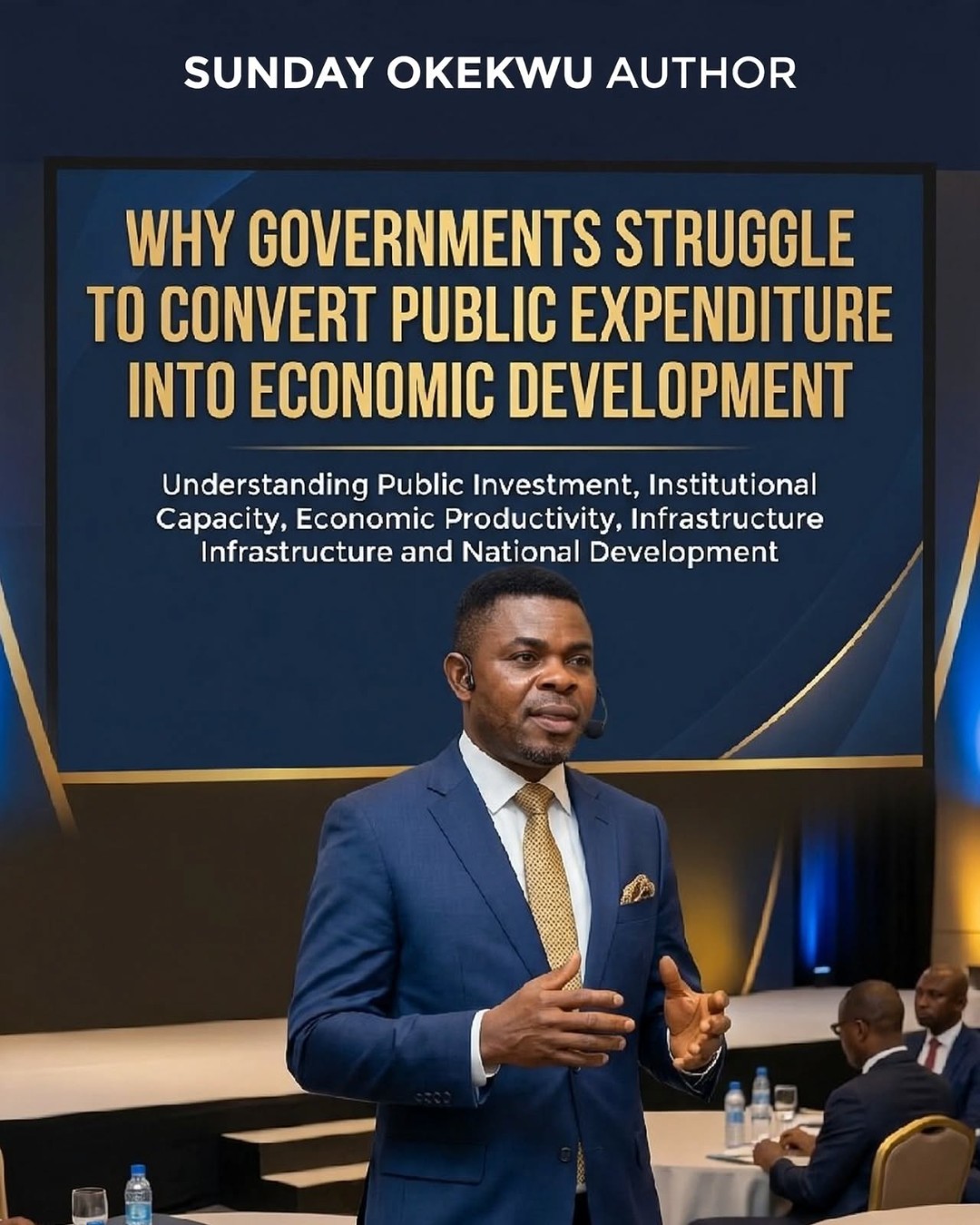
Public expenditure is one of the principal instruments through which governments pursue economic development. Governments allocate substantial financial resources to infrastructure, education, healthcare, industrial development, transportation and other public services. Yet, increased public spending does not automatically produce corresponding improvements in economic productivity, institutional capacity or living standards. Why Governments Struggle to Convert Public Expenditure into Economic Development examines the institutional, economic and administrative processes that determine whether public financial resources become productive national assets and measurable development outcomes. Sunday Okekwu investigates a fundamental question in public economics: why do some countries achieve substantial economic transformation through public investment while others experience persistent infrastructure deficits, incomplete projects, inefficient resource allocation and limited economic returns despite significant public expenditure? The book introduces an analytical framework for understanding the relationship between government revenue, budget allocation, institutional capacity, public investment management, procurement, project implementation, infrastructure utilisation and national development. Its analysis examines several critical dimensions: Public expenditure and the economics of resource allocation. Public financial management and budget execution. Institutional capacity and the conversion of financial resources into public outputs. Public investment management and project selection. Public procurement, implementation and project delivery performance. Infrastructure investment and national economic productivity. The relationship between public investment, private-sector activity and economic growth. Institutional accountability, performance measurement and development outcomes. A central contribution of this work is its examination of the gap between government spending and actual economic development. It argues that the developmental value of public expenditure depends not simply on how much governments spend, but on the institutional systems through which resources are selected, allocated, converted into productive outputs, utilised and sustained. The book develops a seven-stage Public Expenditure-to-Development Conversion Framework (PEDCF), connecting resource mobilisation, resource allocation, institutional conversion, output production, economic utilisation, economic outcomes and development impact. This framework provides a structured basis for analysing where public expenditure systems encounter institutional weaknesses and why financial commitments do not always translate into lasting economic value. The book is relevant to policymakers, public finance professionals, economists, development researchers, government officials, institutional investors, postgraduate students and individuals interested in public investment and national development. Its central proposition is that public expenditure should not be evaluated only by the amount of money governments allocate or spend, but by the productive capacity, economic value and sustainable development outcomes those resources ultimately create.
By Sunday Okekwu
No reviews yet.