
How to Sell an Online Course in Nigeria
Turn what you know into an online course Nigerians will pay for: choosing a topic, planning lessons, recording on your phone, pricing it and getting paid to your bank.
Koseisa Team · 28 Oct 2026 · 4 min read
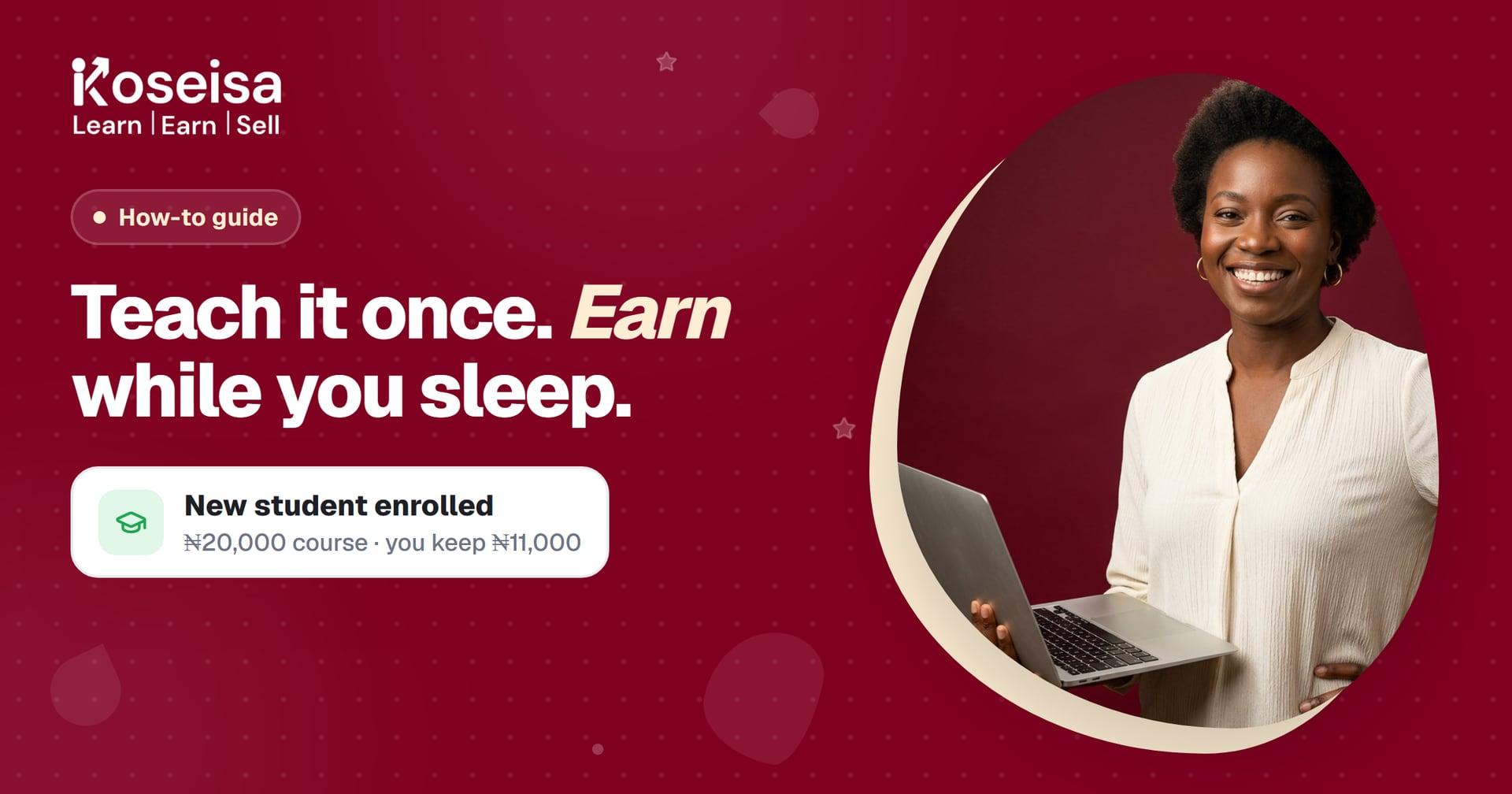
If people keep asking you to teach them something — makeup, Excel, baking, graphic design, forex basics, photography, writing CVs — you can teach them all at once with an online course. You record it once, and people can buy and learn from it while you sleep.
This guide covers the whole journey: picking the topic, planning it, recording it with what you already have, pricing it, and getting paid to your Nigerian bank account.
Step 1: Choose one clear result
A good course promises one result. Not "Learn graphic design", but "Design your first paid flyer in Canva in 7 days". A clear result makes it easy for someone to decide to buy, and easy for you to decide what goes in and what stays out.
Ask yourself:
- What do people already ask me for help with? Your DMs and comments are free market research.
- What would they be able to do after the course that they can't do now?
- Who exactly is it for? A complete beginner, a small business owner, a student? Teach to one person.
Step 2: Plan your lessons before you record
Write down every step a beginner needs to get from where they are to the result. Then group the steps into sections. Most good beginner courses have 3–6 sections with a few short lessons each.
A simple outline:
- Welcome: what they'll achieve and how the course works
- The basics they need before anything else
- The main steps, one lesson per step
- Practice: a small project they finish themselves
- Next steps and common mistakes
Keep lessons short. Five to twelve minutes is plenty. Short lessons are easier to finish, and people who finish recommend you.
Step 3: Record with your phone
You don't need a studio. A recent phone, a quiet room and good light are enough.
- Light: face a window during the day. A small ring light helps at night.
- Sound: people forgive average video but not bad audio. A cheap clip-on microphone makes a big difference.
- Screen lessons: for software skills, record your screen and talk through what you're doing.
- Don't chase perfection. If you make a small mistake, keep going. Re-record only what's confusing.
Add notes, templates or worksheets to lessons where they help. People love something they can download and use straight away.
Step 4: Price it
Nigerian course prices vary a lot, from a few thousand naira for a short skill to ₦50,000 or more for a course that helps someone earn money or get a job. Price by the value of the result, not the number of videos.
Some tips:
- Look at what people already pay for classes, coaching or bootcamps on the same topic.
- Launch with an early-bird price using a coupon code, then raise it once you have reviews.
- Remember the fees. On Koseisa, courses carry a 45% fee and you keep 55%. Sell a ₦20,000 course and you receive ₦11,000. The card processing fee is paid by the buyer at checkout, not by you. The course fee is higher than on other listings because courses cost the most to run: video hosting and streaming, a review before each course goes live, certificates, and refunds.
Step 5: Put it online
On Koseisa:
- Create your free creator page
- Create a course: add your sections and video lessons, notes and files, and quizzes if you want them
- Submit it for review. Koseisa checks every course before it goes live
- Share your course link
Once it's live, your students get:
- Lessons they can watch at their own pace, on phone or laptop
- A place to ask questions right inside each lesson
- A certificate when they finish
- Checkout without an account. They pay by card or bank transfer and set up their login afterwards, so nobody drops off at a sign-up form
Step 6: Get your first students
Your first students will come from people who already know you.
- Teach a small piece for free. Post short videos that solve one small problem, and point to the course for the full journey.
- Show the result. Before-and-after work from a student is the best advert you can have.
- Use WhatsApp. Status updates and broadcast lists still sell better than almost anything in Nigeria.
- Let affiliates sell it for you. On the Standard and Pro plans you can set an affiliate commission, so other creators share your course and earn a cut of each sale. On courses, Koseisa pays 20% of that commission for you.
Get paid
Your share of each sale goes into your Koseisa wallet. Earnings clear after 4 days, so refunds and card disputes are settled first, and then you withdraw to your Nigerian bank. You confirm your identity once, after your first sale.
Common mistakes
- Too much content. A focused 2-hour course that gets results beats a 20-hour one nobody finishes.
- No outline. Recording without a plan means re-recording later.
- Launching quietly. Tell people it's coming, show them behind the scenes, then launch with a deadline.
Ready to build your course?
Start selling on Koseisa for free, or watch the short guide to selling courses.
Found this useful? Send it to a creator friend.
Start selling what you know
Courses, ebooks, 1:1 sessions, event tickets and brand deals, all from one Koseisa page, paid to your Nigerian bank. Free to start.
Keep reading
All posts
How-to guides
How Creators Get Paid in Nigeria: Fees & Payouts
What happens to the money when someone buys from you online: how buyers pay, what fees come out, why earnings clear before you withdraw, and how to get paid to your Nigerian bank without delays.
28 Oct 2026 · 3 min read
How-to guides
Affiliate Marketing in Nigeria for Beginners
How affiliate marketing works in Nigeria, how much you can earn, what to promote and how to share links without sounding like spam. No product, no stock and no big following needed.
28 Oct 2026 · 4 min read
How-to guides
How to Sell an Ebook in Nigeria
A step-by-step guide to writing, pricing and selling your ebook online in Nigeria, with card and transfer payments and instant downloads for your buyers.
22 Oct 2026 · 4 min read